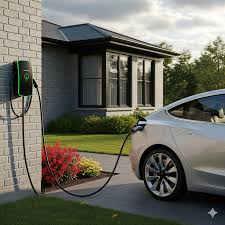
Future-Proofing Your Garage: EVs vs. Gas Cars for the Next Decade
Hey, garage guardians and forward-thinkers! Travis Frosh here, plotting my next move from the sun-baked sprawl of Abuja, where the hum of generators often drowns out the whisper of progress. It’s January 2026, and as I stare at my aging Toyota Corolla in the driveway—reliable but thirsty—I’m pondering the big shift: Do I go electric to ride the green wave, or stick with gas for that familiar roar? With battery tech exploding, charging stations popping up even in Naija’s urban jungles, and global mandates pushing EVs to 30–50% market share by 2035, future-proofing your garage isn’t optional; it’s survival.
In this deep dive, we’ll pit EVs against gas guzzlers head-to-head for the 2026–2036 horizon. Drawing from fresh forecasts, we’ll crunch costs, tech trajectories, and eco-impacts to help you decide: Zap into the future, or fuel up for the familiar? Let’s charge ahead—your wallet and planet depend on it.
The Stakes: Why Your Garage Needs a 2036 Vision
By 2030, EVs could claim 19% of the U.S. market, with global adoption hitting 35% by 2035 thanks to falling battery prices (down 80% since 2010) and incentives like Nigeria’s budding solar-charging pilots. Gas cars? They’re not vanishing—hybrids and synthetics will linger, especially in emerging markets like ours where infrastructure lags. But with EVs slashing emissions by 73% over gas and offering smoother rides with lower upkeep, the tide’s turning. Future-proofing means balancing today’s realities (like Abuja’s spotty power grid) with tomorrow’s wins (solid-state batteries doubling range by 2030). Spoiler: A mixed garage might be the smartest play.
EVs vs. Gas: The Decade-Long Showdown
No crystal ball needed—here’s a projected comparison based on 2026 baselines, factoring in trends like cheaper EVs (average $35k by 2030) and gas at $4–$5/gallon globally. We’ll track ownership costs, performance, and sustainability over 10 years (assuming 15,000 km/year).
| Category | EVs (2026–2036 Outlook) | Gas Cars (2026–2036 Outlook) |
|---|---|---|
| Upfront Cost | $30k–$50k now; drops to $25k by 2030 w/ subsidies. Incentives cut 20–30%. | $25k–$45k stable; used market floods w/ trade-ins. |
| Fuel/Energy Cost | ₦200–300/km equiv.; home charging = 50% cheaper than gas. Solar integration booms in NG. | ₦500–700/km at ₦800/liter; volatility spikes w/ oil geopolitics. |
| Maintenance | Minimal: No oil changes; brakes last 2x longer. $300–500/year avg. | $800–1,200/year; rising parts costs as production wanes. |
| Performance/Range | 400–600 km range std.; 800+ km by 2035 w/ solid-state. Instant torque, silent thrill. | 500–800 km/tank; hybrids bridge gap, but V8s fade. |
| Environment | 73% lower lifetime emissions; grid greening adds 20% savings by 2030. | Hybrids cut 30–50%; pure gas lags w/ tightening regs (e.g., EU bans by 2035). |
| Resale/Tech | Holds 70% value; OTA updates keep ’em fresh. Autonomy levels 3–4 by 2030. | 50–60% retention; tech ages fast—infotainment obsolete quicker. |
| 10-Year Total Cost | $40k–$60k (incl. home charger ₦500k install). | $50k–$80k (higher fuel/maintenance). |
Projections via PwC, IDTechEx, and 2026 model slates—adjust for NG import duties (~50% on EVs). EVs win long-term savings, but gas edges short-haul affordability today.
Pros and Cons: No Clear Winner, Just Your Fit
EVs: The Electric Evolution
Pros: Smoother, sexier drives with zero tailpipe guilt—perfect for Abuja’s stop-go traffic. By 2036, expect bidirectional charging (power your home during blackouts) and 10-min fast-charges for 500 km. Lower running costs shine for high-milers; models like the 2026 Hyundai Ioniq 6 or Tesla Model 3 refresh are garage game-changers.
Cons: Upfront premium and charging woes—rural NG spots might wait till 2030. Battery degradation? Minimal (80% capacity after 200k km), but replacements run $10k+. Range anxiety lingers for road trippers.
Gas Cars: The Reliable Rebel
Pros: Everywhere-to-everywhere freedom—no hunting plugs. Hybrids like the 2026 Toyota Prius Prime blend worlds, and gas holds strong for off-grid adventures. Cheaper now, with a “comeback” vibe amid EV slowdowns—ideal if you’re towing or in low-infra zones.
Cons: Fuel prices? A rollercoaster. Emissions regs will hike taxes by 2030, and resale tanks as EVs dominate. Maintenance creeps up as parts scarcity hits.
Garage Strategy: Build for Both Worlds
Don’t pick sides—hybridize! Start with a plug-in hybrid (PHEV) like the 2026 Ford Escape PHEV for bridge tech: 50 km electric-only for city runs, gas for escapes. Install a Level 2 charger (₦300k–500k) if going EV—solar-tie it for NG resilience. For the next decade:
- Budget Build: Gas daily driver + used EV for short hops.
- Eco Warrior: Full EV now; trade gas for credits later.
- Adventurer: Gas truck + compact EV commuter.
Monitor: By 2028, wireless charging and V2G could tip scales EV-ward.
Plug In or Pump Up? Your Call
Future-proofing isn’t about ditching gas overnight—it’s stacking smart for a decade of flux. EVs lead the charge with savings and sustainability, but gas hangs tough for practicality. In Abuja’s evolving scene, I’d bet on one of each: Electric for the daily grind, gas for the getaway. What’s your garage game plan—full zap or fuel forever? Rev it up in the comments!
This is trend talk, not buy advice—crunch your numbers with a local dealer. Stay charged!




Post Comment